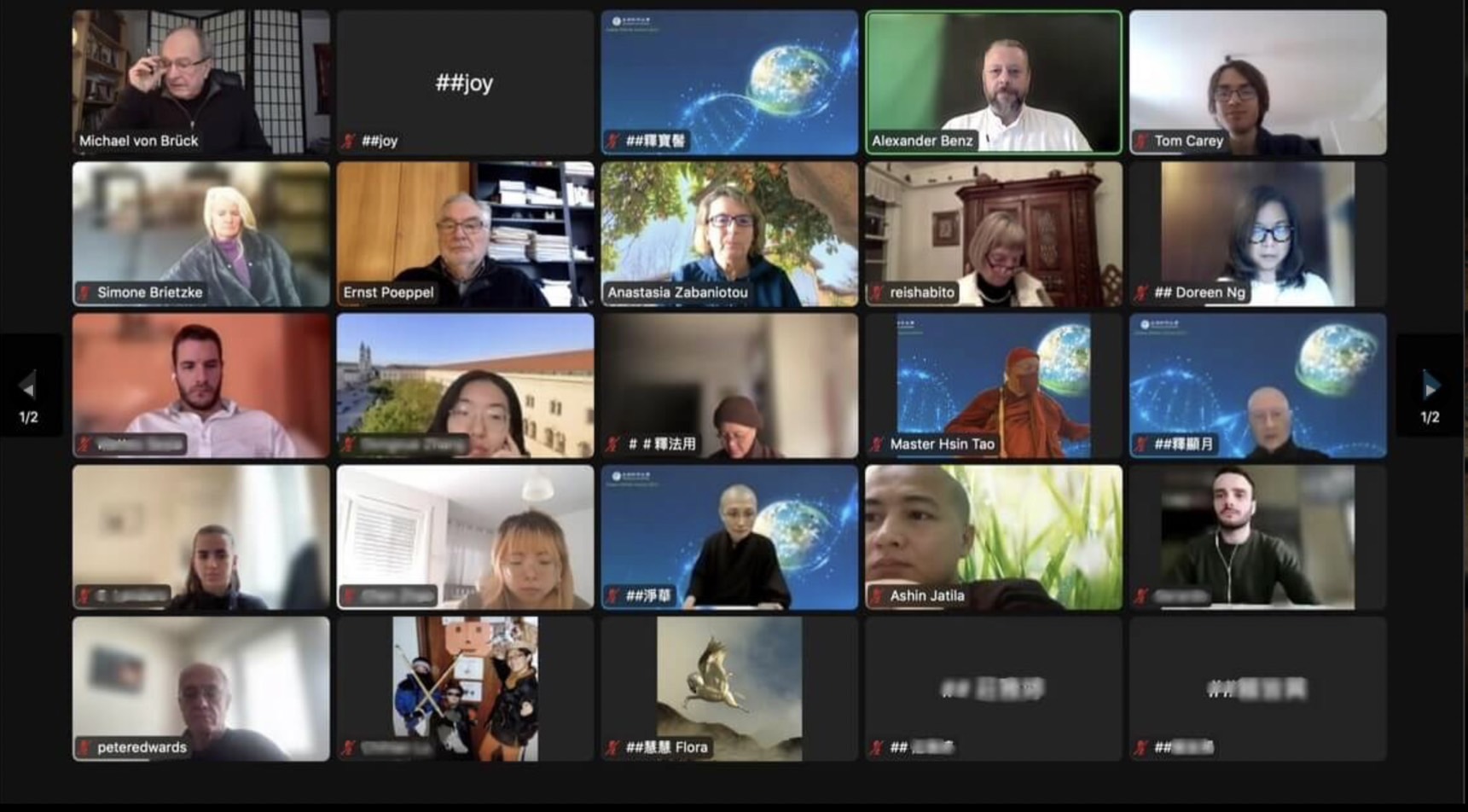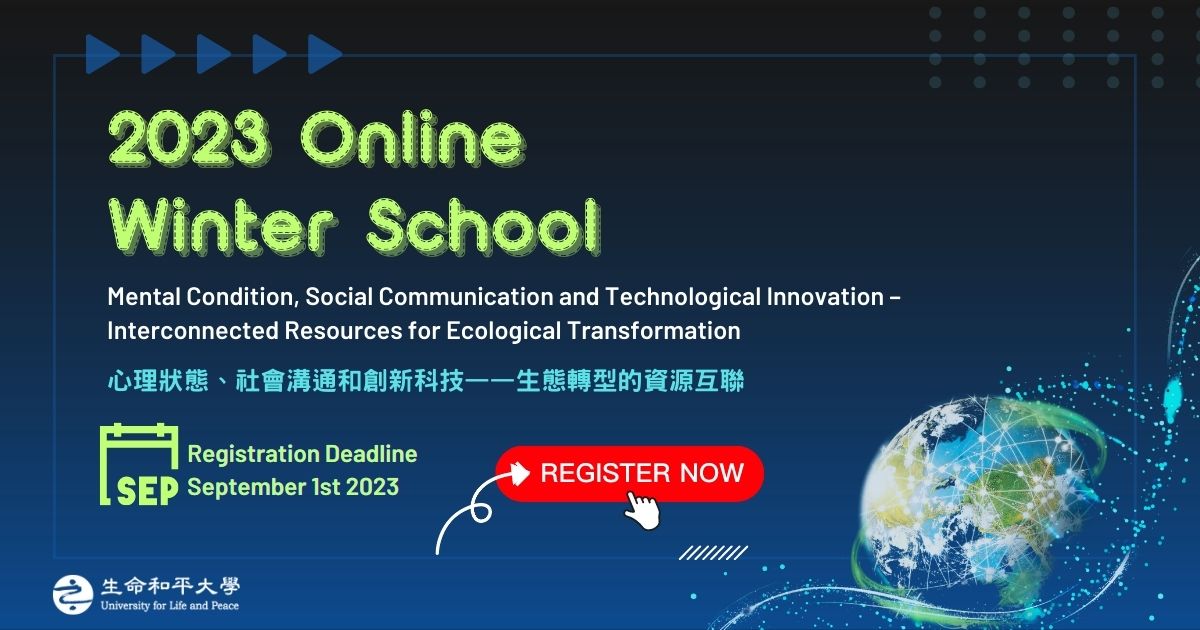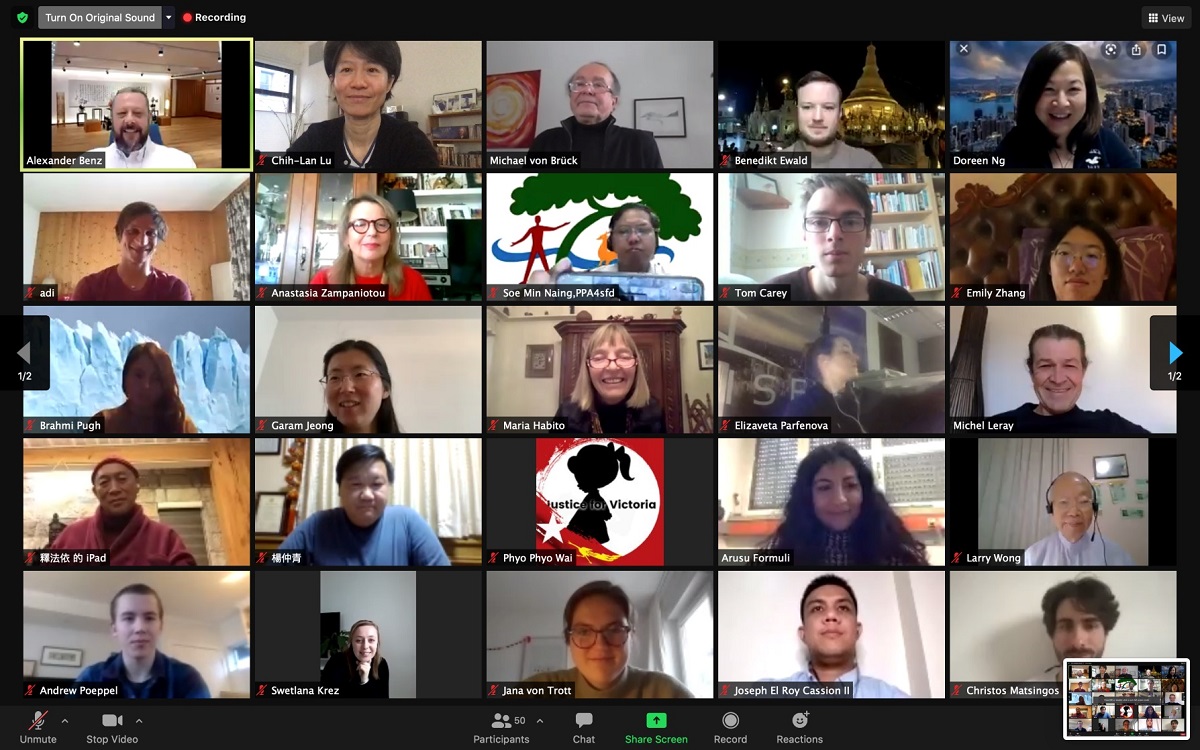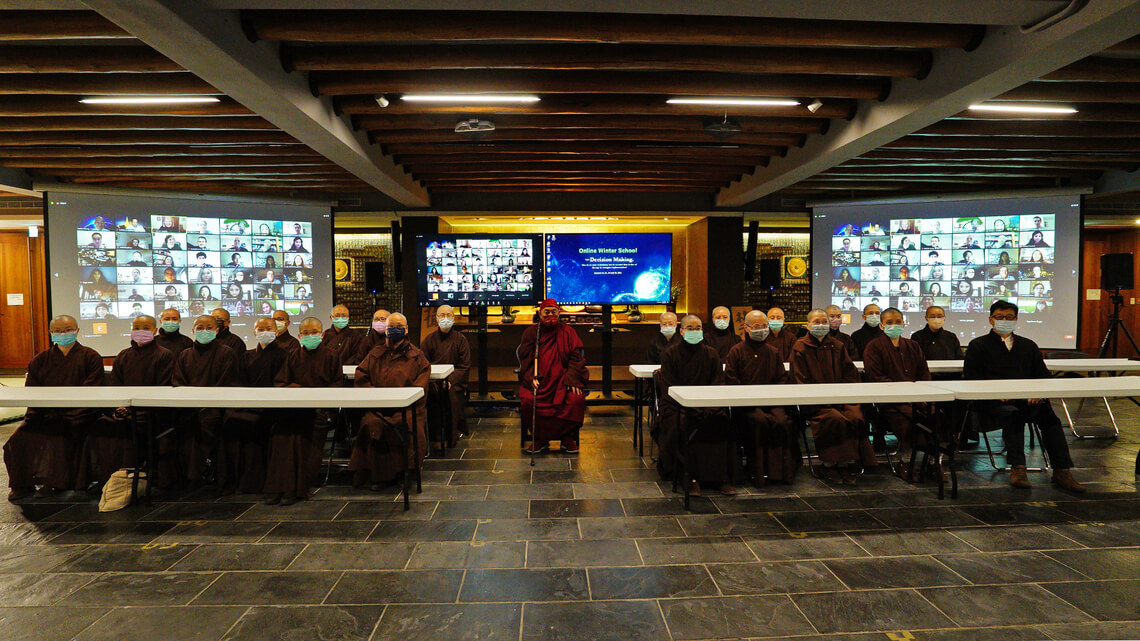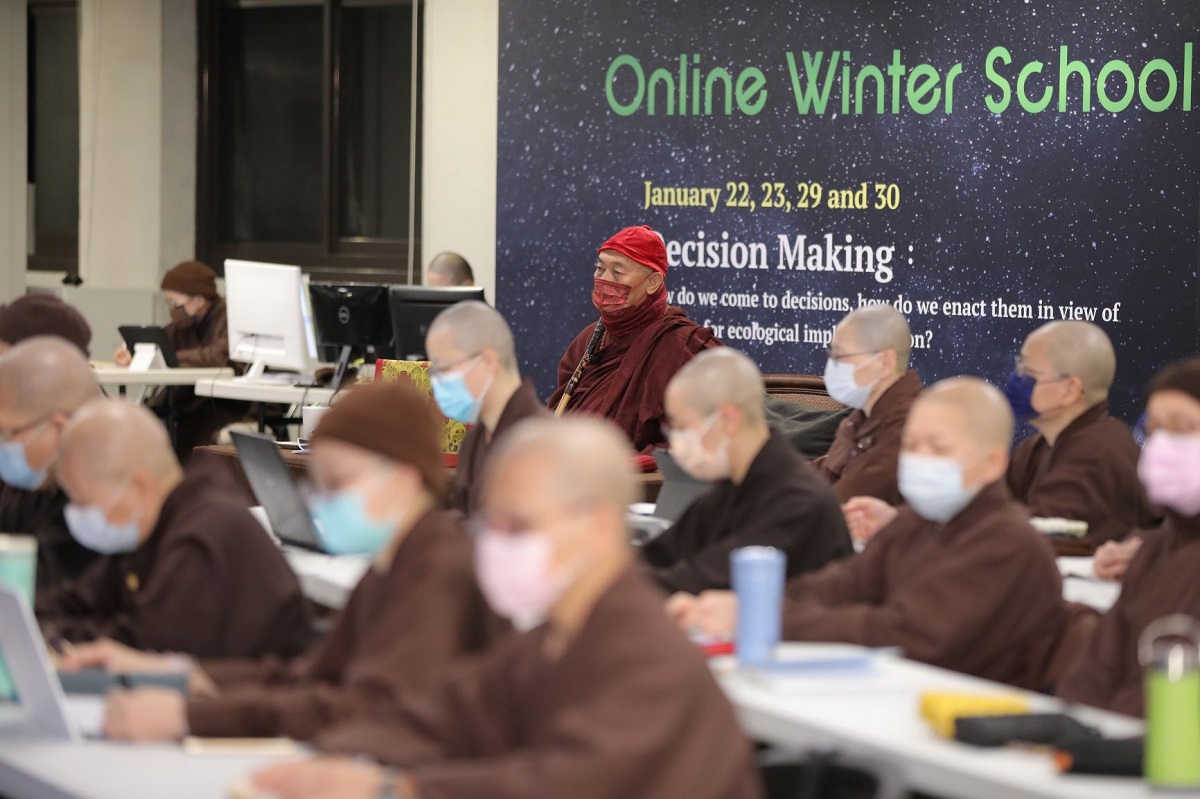


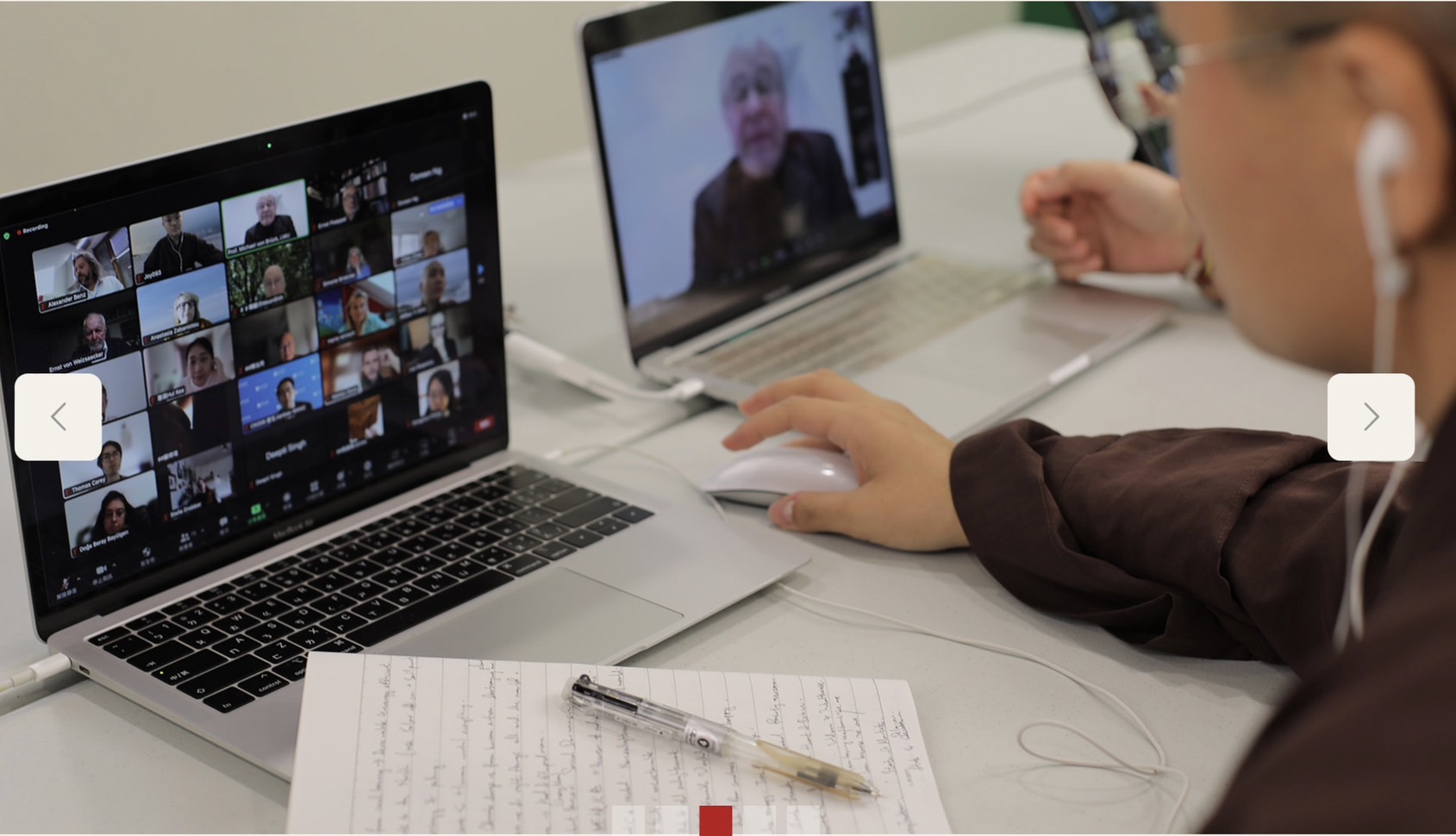
The University for Life and Peace, ULP launched its 2023 Online Winter School on October 28. Dozens of scholars, experts, and graduate students from around the world gathered virtually under the theme “Mental Condition, Social Communication and Technological Innovation – Interconnected Resources for Ecological Transformation” The program explores action plans addressing global crises and ecological transformation from three dimensions—psychological, social, and technological.
Founder Master Hsin Tao expressed his hope that the program would inspire greater awareness and action, encouraging the wise use of technology and broad dissemination of ideas to achieve positive interaction and realize the shared vision of spiritual awakening, peace for all life, and ecological sustainability.
On the first day, Venerable Hsien Yueh, supervisor of ULP, opened the session by introducing the university’s philosophy. He emphasized that ULP was established out of love for the Earth, integrating ecological, humanistic, and technological perspectives to propose practical solutions for sustainability. The Winter School serves as a pioneering program of the university. He thanked the professors who, united in purpose and commitment, devoted themselves to this highly challenging short-term training. Professor Michael von Brueck from LMU Munich also presented an overview of this year’s curriculum.
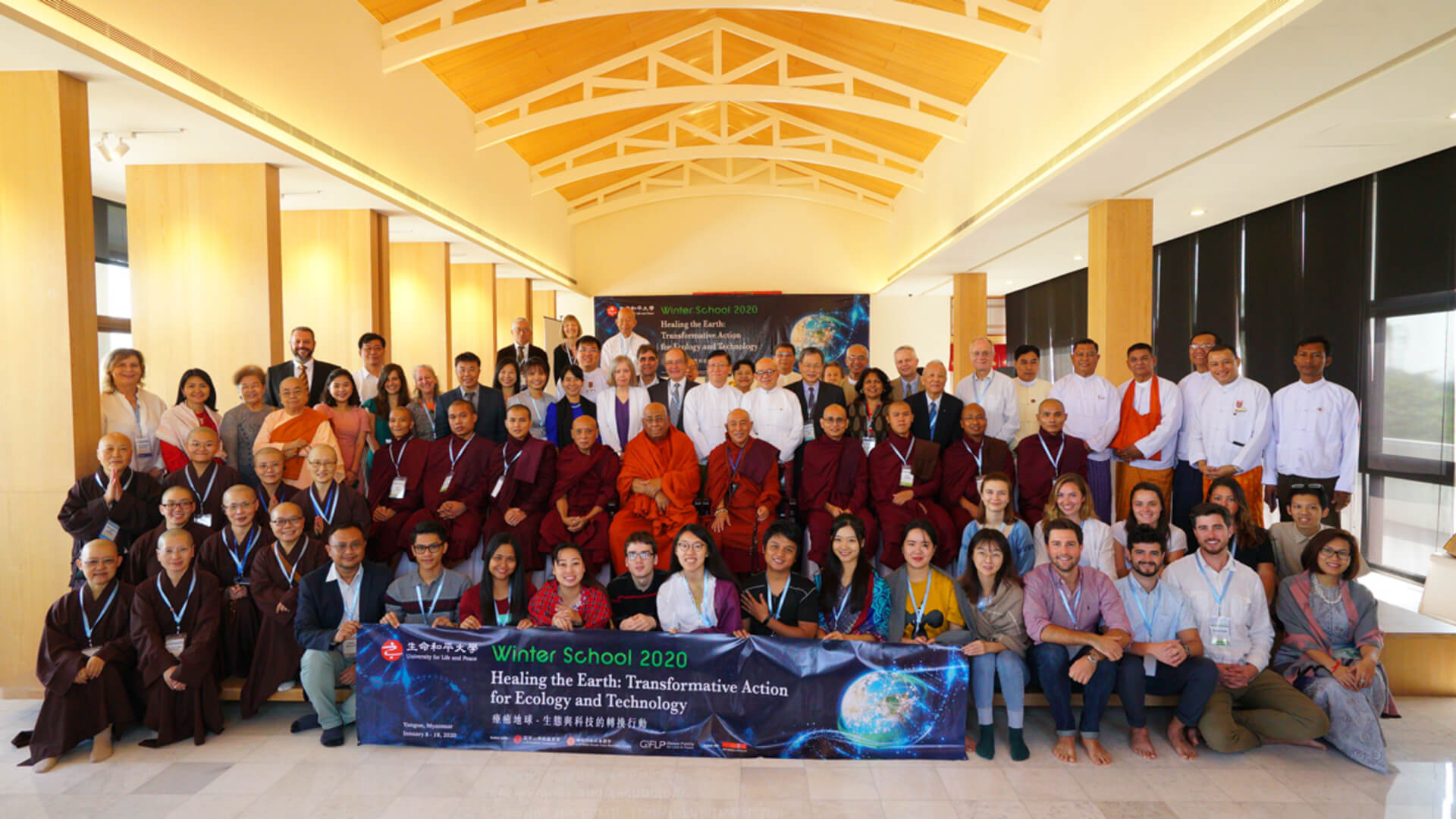
Looking back, each year’s Winter School theme has responded to the broader global context. The first session in 2019, “Examining the Deep Roots of the Ecological Crisis,” introduced the core concept of “Spiritual Ecology.” In 2020, the theme was “Healing the Earth: Transformations in Ecology and Technology.” In 2021, it addressed decision-making in light of urgent ecological conditions. After a year devoted to curriculum development in 2022, the program now enters its fourth year. All themes evolve with the times, enabling students to resonate with the world’s growing ecological awareness.
“Ecological spirituality is like a memory,” said Master Hsin Tao. He noted that the development of technological civilization is closely intertwined with ecological crises, and humanity is already suffering the consequences of global climate change. How much more can Mother Earth endure? Once ecosystems collapse, human civilization will inevitably face catastrophe. He called for adherence to sound governance principles and emphasized that the fundamental solution to ecological crises begins with recognizing that “spirituality is ecology.” Ecology itself possesses spiritual value; only by respecting the intrinsic worth of all beings can we create the conditions for their survival. Through inclusive and positive interaction, life can flourish and its fruits be shared.
The 4th ULP Online Winter School will continue through December 2. Through seven lectures reflecting diverse cultures and perspectives, as well as debates, group discussions, and seminars, the program aims to deepen the core principles of spiritual ecology and cultivate innovative, action-oriented wisdom.
This year, the ULP Preparatory Office collaborated with LMU and VDW. The distinguished faculty and advisory team include Professor Michael von Brueck and Professor Ernst Pöppel of LMU; Professor Klaus Mühlhahn, President of Zeppelin University; Professor Ulrich Bartosch, President of the University of Passau; Professor Ernst Ulrich von Weizsäcker, Member of the German Bundestag and founder of the Institute for Climate, Environment and Energy; Dr. Maria Reinisch, Secretary General of VDW; Professor Sabin Bieri of the University of Bern; Dr. Wang Jianbao of Peking University and CKGSB; Mr. Christian Felber, founder of the Economy for the Common Good; and Associate Professor Monica Gagliano of Southern Cross University. They will provide guidance whenever student groups encounter challenges in discussion.
On the first day, lectures explored themes such as new enlightenment, global citizenship and humanistic contexts, the green economy, artificial intelligence, and ecology. Professors actively contributed insights, highlighting concepts such as harmony in diversity, the Doctrine of the Mean, balance, and ethical responsibility.
Thirty-two graduate students residing in twelve countries—including Germany, the United Kingdom, Italy, Russia, Türkiye, Iran, China, Japan, Myanmar, India, Sri Lanka, and the Philippines—shared their intended research topics. They will transcend geographic and disciplinary boundaries to brainstorm transformative solutions rooted in love for the Earth.
Master Hsin Tao affirmed that all participants coming together online to explore ecological transformation for humanity and for the planet represents a rare and precious connection.